

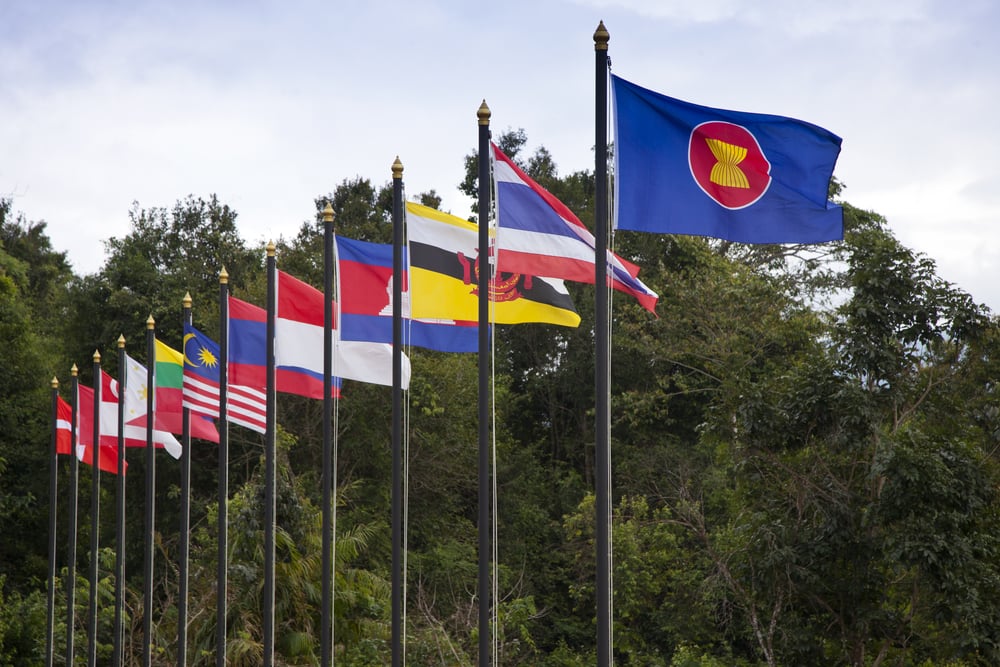
ASEAN environment ministers met in Langkawi, Malaysia, for a three-day summit on climate and sustainability. The 18th ASEAN Ministerial Meeting on Environment (AMME-18) gathered more than 200 delegates from member states, Timor-Leste, and partners like the EU, China, South Korea, and Japan.
The timing is key. With COP30 in Brazil just weeks away, ASEAN leaders are aligning their climate goals. As per reports, Malaysia used the platform to push regional cooperation, highlight haze reduction, and strengthen climate finance strategies.
Carbon Credit Potential in ASEAN Heritage Parks
During the summit, Malaysia nominated three sites as ASEAN Heritage Parks: the Tengku Hassanal Wildlife Reserve, Bako National Park, and Lambir Hills National Park. These designations highlight biodiversity protection while boosting climate goals.
Heritage Parks act as natural carbon sinks. Protecting them enhances carbon capture, builds ecosystem resilience, and supports communities. They also set the stage for large-scale carbon credit projects that meet strict international standards.
“ASEAN Heritage Parks are the protected areas of high conservation importance, preserving in total a complete spectrum of representative ecosystems of the ASEAN region.”
They now represent new frontiers for carbon markets. By safeguarding forests and restoring degraded land, these areas can generate verified carbon credits. With strong monitoring, reporting, and verification (MRV), the credits become highly attractive for global buyers.
Malaysia has already shown proof of concept. The Kuamut Rainforest Conservation Project sold its first carbon credits through auction earlier this year. Expanding this model to new Heritage Parks could unlock billions in climate finance while conserving vital ecosystems.
Building Trust Through Policy and Standards
Carbon markets rely on credibility. To address this, ASEAN is creating strong governance tools. The upcoming ASEAN Centre for Climate Change will guide compliance, carbon reporting, and green investment. This move gives investors confidence in the quality of regional credits.
At the same time, the ASEAN Climate Change Strategic Action Plan provides a roadmap for carbon pricing, emissions trading, and sustainable finance. These efforts prove that ASEAN is not only setting targets but also building systems that work.
Nature-Based Solutions Drive Climate Advantage
ASEAN holds one-quarter of the world’s natural climate solutions potential. Its tropical forests, wetlands, and mangroves can absorb vast amounts of carbon. By centering Heritage Parks in climate policy, ASEAN is positioning itself as a global leader in nature-based projects.
These projects also bring co-benefits. They protect biodiversity, improve water and air quality, and support rural livelihoods. Recognizing cities and parks for sustainability achievements adds momentum and strengthens public trust in climate action.
ASEAN and the COP30 Action Agenda
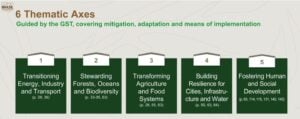
The outcomes from Langkawi directly tie into the COP30 Action Agenda, which calls for faster global action on mitigation, adaptation, finance, technology, and capacity-building. ASEAN’s focus on Heritage Parks, carbon markets, and haze reduction fits squarely into this framework.
The Action Agenda also builds on the results of the first Global Stocktake (GST-1), urging countries and non-state actors to close implementation gaps. ASEAN’s joint statement for COP30 signals that the region is ready to mobilize all actors—governments, businesses, and communities—to accelerate emission cuts and protect ecosystems.
By aligning regional goals with the six thematic pillars of COP30, ASEAN is demonstrating how nature-based solutions and carbon markets can translate negotiated commitments into practical outcomes. Heritage Parks, in particular, serve as proof that the region is putting Paris Agreement ambitions into action on the ground.
Malaysia Pushes Carbon Pricing and Green Finance
Malaysia used AMME-18 to emphasize the financial opportunities of carbon markets. Officials called for emissions trading and carbon taxes as core tools for a low-carbon economy.
The stakes are high. Analysts estimate that ASEAN could generate up to $3 trillion in revenue by 2050 through carbon credit projects. Forest restoration, reforestation, and sustainable agriculture will drive this growth, yielding both economic and environmental benefits.
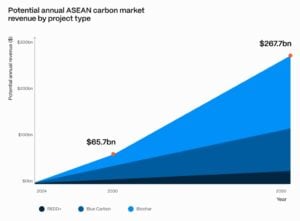
Source: Abatable
What Carbon Market Stakeholders Should Watch
The Langkawi summit delivered key signals for businesses, investors, and project developers:
-
Aligned Standards: Expect smoother trading across Southeast Asia as regulations harmonize.
-
New Nature Projects: Forest-rich states will expand high-quality carbon credit projects.
-
Guidance Hub: The ASEAN Centre for Climate Change will release updates on MRV and finance.
-
Investor Confidence: Regional oversight will improve trust in ASEAN carbon credits.
These outcomes make ASEAN one of the most attractive regions for carbon finance in the coming decade.
Malaysia’s leadership at AMME-18 marked a turning point. Heritage Parks now stand as proof that protecting nature can fuel credible carbon credits and attract global investment.
By linking conservation to finance, ASEAN is creating a model where climate action also drives economic growth. With stronger policies, high-quality credits, and nature-based leadership, ASEAN is stepping onto the global stage as a key player in carbon markets and the COP30 Action Agenda.